
The annual migration across the Serengeti
Wildebeest Migration
The great migration in East Africa is one of the nature’s most dramatic wildlife events. This event takes place annually across the plains of the Serengeti in Tanzania as well as the Masai Mara in Kenya.
During this daunting journey masses of wildebeest as well as smaller herds of zebra follow a hooplike migratory route across the Serengeti and Masai Mara game reserves. This wild-life spectacle takes place through most of the year, but the climax occurs between July and October.
Large herds of wildebeest and zebra make their way north in search of better grazing and water. These massive herds are joined by smaller groups of Grant’s gazelle, Thomson’s gazelle, eland, and impala.
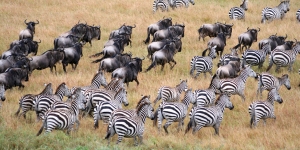
After traversing the daunting Grumeti River in Tanzania the large herds make their way north where they eventually reach the Mara river. Here spectacular death-defying river crossings take place. These treacherous crossings put life and death across the Mara River on full display.
They gather in their thousands along the riverbanks before taking the final plunge to reach the other side. Lying in wait are hungry and fearless predators such as the Nile crocodile. Rocky obstacles, raging currents and furious rapids add further peril to this deadly river crossing. Many will perish. Vultures will feast on carcasses left behind by the crocodiles.
Those who make it to the other side must then contend with land-based predators such as lion, leopard, and wild dogs. During this treacherous and brutal journey, nature will coldly decide who will live and who will die.
The Mara crossing is a true bucket list event for many travelers. It is nature’s most iconic fracas and you can see it unfold in real-time before your eyes.
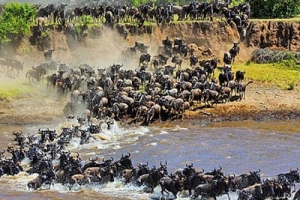
Below is a a typical safari during which you could experience a Mara river crossing
The migration month by month
January to March
The massive herds are spread across southern Serengeti. This is calving season and the wildebeest need the nutrient rich savannah grass plains that are found here. Wildebeest and Zebra are everywhere, feeding on the fresh and nutritious grass and drinking from replenished water sources. They will remain here probably till end of March.
April to May
During April they start their great migration north. In May the migration picks up steam and the herds often split into smaller groups as they make their way North along the Western corridor of the central Serengeti.
June to July
Splinter herds usually amass in the western corridor and as they move northwest towards the Grumeti Reserve and up along the central Serengeti. This is a great time for days out on safari with a picnic lunch. Here you will see the large herds of Wildebeest and Zebra moving in mile-long columns. You can also expect great leopard sightings in Central Serengeti and lion and elephant in Grumeti.
Around June the wildebeest migration slows on the south side of the Grumeti River. Large herds gather here for a while before crossing the river. The river at this time is normally a collection of pools and channels but the crossing is still risky due to the presence of crocodiles.
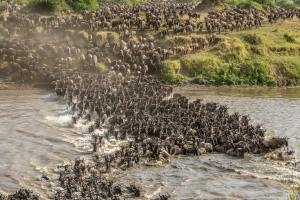
The crossings at the Grumeti river are challenging, but not as spectacular as the crossings of the Mara River, further north.
The wildebeest migration continues north during July. The herds often split up and spread out across a vast area. Some will migrate through Grumeti Reserve and others will head north through the heart of the Serengeti National Park.
August to October
The large herds congregate and make their way across the Northern Serengeti as well as the Masai Mara. Here they face their biggest obstacle – the Mara River. As the herds assemble near the river banks large crocodiles lie in ambush. Rocks, currents, and rapids also add to the danger. As the frantic herds start crossing the Mara River a spectacle of life and death unfolds.
Many will be killed by crocodiles, hundreds will drown during the crossings.
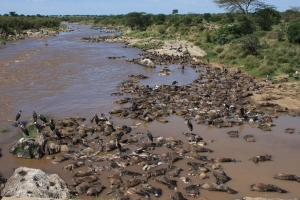
As they follow the rains in search of fresh food and water, the herds cross the Mara. Later many will cross back and return to the Serengeti. This process continues for several months. There are several crossing points along the Mara river.
By October the migrating herds start making their way back towards the southern Serengeti where the rains will replenish the water supplies and revitalize the grassy plains of the savannah.
November to December
The Migrating herds often split into smaller groups as they move south through the eastern, western, and central Serengeti. Some will migrate down via Grumeti and others will move straight down through the central Serengeti. Each splinter groups moves at different pace as they make their steady way towards the southern plains. They pass through the Lobo and Seronera before finally reaching their destination.
The short rains normally start in early November and signals the end of the dry season. Late November through December, the migrating herds arrive on the short-grass plains of the Serengeti. Wildebeest and Zebra are everywhere and feeding on the fresh of nutritious grass.
Safaris to the Serengeti and Masai Mara
We offer several safaris to Tanzania and Kenya.
Other activities
In addition to thrilling land-based game viewing there are other great activities such as Maasai-guided nature walks, hot air balloon safaris and cultural village tours. These are often optional add-ons to your safari.
.


